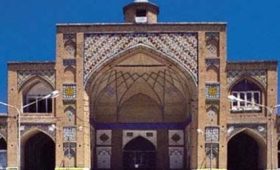
Jameh Mosque of Kashmar: A Historical Masterpiece
The Jameh Mosque of Kashmar is one of the most significant historical landmarks in the city, located at its very center. According to its inscription, the mosque was constructed around the year 1213 AH (approximately 1798 AD) during the reign of Abdul Ali Khan and Mustafa Qoli Khan Mishmast, concurrent with the rule of Fath Ali Shah Qajar. This mosque is not only a place of worship but also a stunning example of Qajar architectural style and craftsmanship.
Architectural Features
The Jameh Mosque of Kashmar showcases classic Persian architectural elements, combining intricate tile work, brick masonry, and the characteristic large dome. The mosque’s structure is symmetrical, built to accommodate a large number of worshippers, with a spacious prayer hall that reflects the religious and social importance of the time.
One of the most striking features of the mosque is its grand entrance, with an elegantly designed iwan (arched hall), which is typical of Persian mosque architecture. The large dome, which towers over the mosque, is supported by a set of graceful arches, creating an awe-inspiring atmosphere inside.
The mosque also features several smaller domes and shabestan (underground chambers) used for additional prayer spaces, which reflect the traditional design elements of Persian mosques from the Qajar era. The walls are adorned with beautiful inscriptions and geometric tile patterns, some of which depict verses from the Quran, adding to the spiritual ambiance of the space.
Historical and Cultural Significance
The Jameh Mosque of Kashmar was built during a period of great political and cultural growth in Persia, particularly under the Qajar dynasty, known for its efforts to consolidate power and promote Persian culture. The mosque not only served as a place for religious ceremonies but also as a symbol of the local administration’s prestige and influence.
The mosque’s construction during the rule of Fath Ali Shah Qajar is indicative of the flourishing arts and architecture during this time. The Qajar dynasty was known for its promotion of architecture that was both functional and aesthetically grand, and the Jameh Mosque stands as a prime example of this vision.
A Center of Faith and Community
For centuries, the Jameh Mosque has been more than just a religious space. It has been a center of community life, hosting local events, religious gatherings, and educational programs. The mosque is a symbol of unity for the people of Kashmar, attracting visitors and worshippers from surrounding areas, drawn not only by its religious significance but also by its historical and architectural importance.
The Jameh Mosque of Kashmar is a remarkable reflection of the cultural heritage of Kashmar and the broader Persian architectural legacy. Its design, historical background, and role in the community make it an essential destination for anyone interested in exploring the deep history and artistic traditions of Iran. The mosque continues to stand as a testament to the skills and vision of its creators, and its beauty remains an enduring symbol of the richness of Persian heritage.