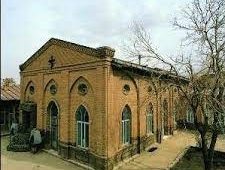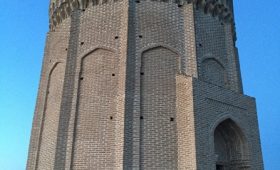
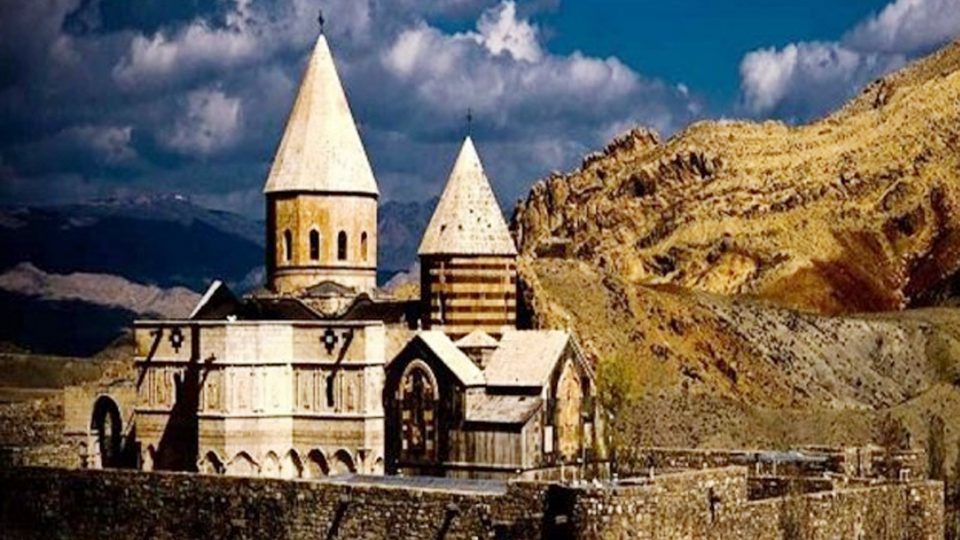
Three important Iranian churches named “Qarah-e-Kelisa”, “St. Stephen” and “Holy Mary” in the provinces of East Azerbaijan and West Azerbaijan were registered as the ninth Iranian work in 2008 in the UNESCO World Heritage List. The decision was made at a meeting of the World Heritage Committee on July 6 in Canada.
The churches of Azerbaijan are outstanding examples of traditional Armenian architecture and decorations of universal value. They are works that have resisted the cultural exchanges of the region, especially Byzantine, Orthodox and Persian.
These churches date back to the 7th to 14th centuries and have been rebuilt and restored several times due to natural and man-made disasters.
Collection of churches in Azerbaijan, Qara Kelisa:
Black Church or Qarah Church or Church of St. Thaddeus or Church of Tatavus is the name of a historical church in the province of West Azerbaijan in Iran. This church is located 20 km northeast of Chaldoran next to a village of the same name. This church is probably the most interesting and remarkable Christian building in Iran.
Christians from all over the world gather in this church every year on July 1 to commemorate the anniversary of the martyrdom of St. Thaddeus.
There seems to be nothing left of the main church. The building was extensively rebuilt in the 13th century, but parts of the sanctuary may date back to the 10th century. Most parts of this building now belong to the 17th century. The oldest part is made of black stone.
St. Thaddeus, one of the apostles of Jesus Christ and one of the founders of the Armenian Apostolic Church, was assassinated in 66 AD for preaching Christianity. His tomb is located in Qarah Kelisa and is mentioned as one of the most important Armenian shrines.
Qara Church has unique features. The technique and volume of the Qarah Church building, in turn, is one of the rarest visual arts payments. The presence of defensive walls around the church and its main entrance indicates that this building is also a castle. In the four directions of the castle, there are five watchtowers in the shape of an arch. St. Tatavus Cathedral consists of rooms reserved for monks, students, scholars and writers, church guards and its library. In addition, there is a small basement under the rooms and small spaces such as dining room, kitchen, mill, extractor, crypt for food storage and other spaces in the western side life.
If we look at the cross section of Tataus Church, the whole building is seen as a single building and we find that this church is rectangular, which is, unlike the original Armenian temples, that were square in shape, it is rectangular. The eastern part is made of black stone and is the only part that survived the 1391 earthquake. It includes the altar and side rooms and the front yard of the altar and a small dome. The tomb of the daughter of the Armenian prince, the daughter of King Sanduk, who was martyred for her Christianity, is also located on a hill near the church.
Collection of churches in Azerbaijan, Saint Stepanos Monastery:
The Church of St. Stephen, or St. Stephen’s Church, was built in the ninth century AD and has been severely damaged by severe earthquakes. This building is located in East Azarbaijan province, 17 km west of Jolfa city and 3 km south of Aras River in a place called Ghezel Vanak (Red Monastery).
The general structure of the church is more similar to Armenian and Georgian architecture, and the interior of the building is decorated with paintings by an Armenian artist.
This church is revered by all Christians and almost all religions, but in fact it belongs to the Christian branch of Gregory (followers of Gregory the Illuminator) who lives in Armenia. On one day of the year, thousands of Armenians gather here to perform their special rituals and ceremonies during the pilgrimage.
Collection of churches in Azerbaijan, Church of Gravity
The church is located in an area surrounded by trees and green valleys, and the stone fence that surrounds the building is a high fortress with seven guard towers and five stone pillars behind the strongholds of the Sassanid period and the early centuries of Islam. The gate of this fort is installed in the middle of the western wall and has a wooden and iron door. At the bases of the sides and its truncated arch, stone carvings are used with delicate carvings, and a relief of Mary and the childhood of Jesus can be seen on the forehead of the arch. On the outer walls of the church, there are beautiful reliefs, including the stoning of St. Stephen on the east side, the crucifixion of Jesus Christ on the west side and the ascension of Jesus Christ. The church has three main and specific buildings as well as various sub-sections. The three main parts are: the main prayer house, Daniel’s stove, the bell tower.
Church of the Blessed Virgin Mary:
The Church of the Blessed Virgin Mary, also known as the Church of the Assumption, is located in the province of Mako, West Azerbaijan, 12 km northwest of Qarah. Its original structure was located in the valley of the Qarasu River at a height of 50 meters above the valley level, but due to the fact that after the flooding of the Baron Dam, it may have been located deep in the lake behind the dam by the Cultural Heritage Organization and the Cooperation Council of the Armenian Caliphate of Azerbaijan. It was completely moved to the heights by the lake and rebuilt at that point.
The plan of the Church of the Blessed Virgin Mary is cruciform both inside and out and has a 16-sided dome with four skylights. Apart from the skylights of the dome, four skylights are built on four walls and the only entrance to the church is from the west side. The materials used in the church are hewn stone and mortar. After relocating the church to the top of a lake overlooking the lake, they built it on a plateau and restored the parts of the church that had been destroyed in their original location using new stones.